
NITHSDALE
Arbigland
Rhododendrons, azaleas and camellias in formal and water gar-dens with Torbay-like climate. John Paul Jones's Cottage was 1747 birthplace of United States' first naval commander.
Auchencairn Bay
Pebble beaches become acres of sand at low tide. Smugglers built 18th-century Balcary House, hotel 2 miles south-east of Auchencairn village to store contraband. Foot-path beyond bay through woods, farmland and rocky shore leads to spectacular cliffs.
Blowplain Open Farm
Guided tours show day-to-day life on stock-rearing hill farm set in rolling countryside.
Broughton House
Museum and art gallery in elegant Georgian mansion with sheltered gardens on River Dee. Library has 15,000 books and manuscripts.
Cairnholy
Facade of tall standing stones flanks entrance of larger of two Stone Age burial mounds 200yds apart dating from 3000 BC.
Cardoness Castle
This well-preserved 15th-century tower house still has original stair-way and vaulted basement.
Castle Douglas
Bronze Age crannogs (artificial islands) among islets of Carling walk Loch on southern edge of 18th-century weaving and carpet-making centre. Main street has steeple-like clock tower.
Cauldside Burn
At head of Cauldside Burn are Bronze Age remains of two cairns, two stone circles and large carved stone block. Larger circle, 70ft across, has ten standing stones.
Dalbeattie
Forest walks start from outskirts of silvery-grey granite town in rolling countryside.
Drumlanrig Castle
Pink-sandstone stately home, 17th century, has art collection as well as personal possessions of Bonnie Prince Charlie. Wooded parkland overlooks upper Nithsdale and old stables now house visitor and craft centre.
Dumfries
Former seaport where Robert Burns lived before his death in1796. House contains personal possessions. Robert Burns Centre recalls his years in Dumfries and his mausoleum is in St Michael's churchyard. Mid Steeple was built in 1707 as courthouse and prison. Bridge dating from 15th century is oldest of five across River Nith, and 18th-century windmill contains camera obscura and local history museum.
Dundrennan Abbey
Handsome and substantial Cister-clan ruin, founded 1142, where Mary, Queen of Scots spent last night in Scotland, 1568. Murdered bishop and his assassin among many fine memorials.
Durisdeer
Dukes of Queensberry mausoleum in 17th-century Durisdeer Church. Monument to second duke (d. 1711) and his duchess (d. 1709) has them reclining beneath columns and flying cherubs.
Ellisland Farm
Farmhouse, built by Robert Burns when he took farm over in 1788, contains museum room. The Granary houses display showing Burns as farmer. Riverside walk. Burns wrote Tam o'Shanter here.
Fleet Forest Trails
Footpaths and marked walks through oak, ash, beech and sycamore woods.
Gatehouse of Fleet
Former cotton town is now walking and holiday centre on banks of Water of Fleet. Original gatehouse now houses whitewashed wine bar and Bobbin Mill Visitor Centre displays local history and recalls 18th-century prosperity as cotton town.
Kippford
Village, once smugglers' haunt, now sailing resort, home of Solway Yacht Club. Houses are mixture of old fishermen's cottages and modern bungalows and villas. Low-tide walk from pebble beach to Rough Island bird sanctuary -- home of waders, scaups, shelducks and mergansers. Jubilee Path has views to distant Galloway mountains.
Kirkbean
Unusual domed parish church of well-kept village has 1826 sundial telling times in such places as Madras, Calcutta and Gibraltar. Font presented by United States Navy in 1945 to honour its first naval commander John Paul Jones who was baptised here.
Kirkpatrick Durham
Orderly estate village little changed since it was built in 1785, with 50 houses and number of craft workshops.
Kirkcudbright
t A V It Bb Town dominated by St Cuthbert's Church spire, Gothic tower of Tolbooth (1411) and jagged top of 16th-century MacLellan's Castle. Wooded Wildlife Park has eagle, snowy and barn owls.
Lincluden College
Red-sandstone remains of 12th-century convent. Fine heraldic decorations. Knot garden has been restored.
Mabie Forest
Views of Nithsdale and the Solway Firth can be seen from marked trails that lead through hillside plantations of fir, spruce, oak and beech.
Maxwelton House
Restored 14th to 15th-century house was once home of Annie Laurie, immortalised in Scottish ballad of same name written by her unsuccessful suitor, William Douglas, and later revised. In courtyard is museum of kitchen, dairy and farm implements.
Mote of Mark
Excellently preserved Celtic hill-fort of 5th or 6th century, one of most important archaeological sites on Solway Firth. Good views of Cumbrian Hills.
Mote of Urr
Most extensive motte-and-bailey castle in Scotland, dating from 12th century, and built on Saxon or early Norman mound.
New Abbey
Grey-stone riverside village with beautiful ruin of 13th-century Sweetheart Abbey, where Lady Devorgilla and embalmed heart of husband Johnde Baliol are buried. Scottish Baronial mansion, Shambellie House, contains costume museum with women's fashions from 18th century to Edwardian times. Water-powered corn mill, dating from 18th century, is in working order.
New Galloway
Angling centre on River Ken has town hall with high clock tower and jougs, hinged iron collars in which malefactors were confined. Carved Adam and Eve stone stands in Kells churchyard.
Orchardton Tower
Round tower house, unique in Scotland, built by John Cairns in the 15th century. Spiral staircase, hidden within double walls, leads to parapet walk.
Palnackie
Village little changed since days as thriving inland port, with colour-washed houses around harbour, now silted up. Competitors use bare feet and spears to catch fish from mud flats in World Flounder Tramping Championships, off Glen Isle peninsula. Upper floors in two-storey houses were once lodgings for sailors.
Raiders' Road
Ten-mile forest drive beside Black Water of Dee, follows route taken by armed cattle thieves in SR. Crockett's 1894 novel The Raiders. Riverside and lochside picnic areas, walks and bronze otter statue. Open June-September. 20mph speed limit.
Thornhill
Village among attractive shallow hills has two boulevards lined with 100-year-old lime trees planted by 6th Duke of Buccleuch. Tall column erected 1714 supports winged horse, emblem of Dukes of Queensberry.
Threave Garden and Wildfowl Refuge
Estate surrounding Scottish Baronial Threave House has woodland walks and various gar-dens including display in spring of 200 daffodil varieties. Observation points overlook refuge along banks of River Dee with wild swans, ducks and geese. On island to north-west is mined Threave Castle, 14th-century stronghold of feared Black Douglases.
Tongland
Battlemented and turreted bridge over River Dee, designed by Thomas Telford in 18OOs. Guided tours of hydroelectric power station and dam.
Twelve Apostles' Stone Circle
Dated 2000 BC, largest diameter stone circle in Scotland.
ABERDEENSHIRE
» Arbroath
» Ballater & Balmoral
» Banff & Buchan
» Caerlaverock Castle
» Callander
» Castle Sween
» Claypotts Castle
» Dornoch
» Drum Castle
» Dunbeath Castle
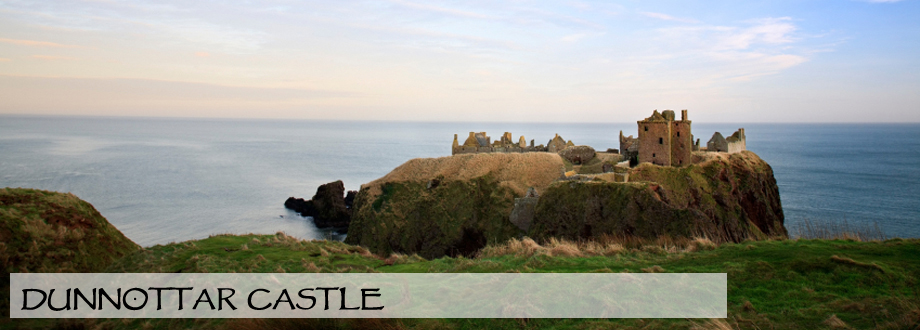
» Dunnottar Castle
» Dunstaffnage Castle
» Edzell Castle
» Glamis Castle
» Inchture
» Kirriemuir
» Montrose & Strathmore
» Nithsdale